Psalm 23 (KJV):
The Lord is my shepherd; I shall not want.
He maketh me to lie down in green pastures:
he leadeth me beside the still waters.
He restoreth my soul:
he leadeth me in the paths of righteousness for his name’s sake.
Yea, though I walk through the valley of the shadow of death,
I will fear no evil: for thou art with me;
thy rod and thy staff they comfort me.
Thou preparest a table before me in the presence of mine enemies:
thou anointest my head with oil; my cup runneth over.
Surely goodness and mercy shall follow me all the days of my life:
and I will dwell in the house of the Lord for ever.
This is one of the most popular passages of the Bible, written by King David, who was also a shepherd himself before he was anointed as the second King of Israel. David truly knew what it meant to guide, protect, and provide for sheep that were dependent on him. Another interesting fact about this psalm is that many scholars believe David wrote it later in his life, reflecting on God’s faithfulness through all of the battles, joys, sorrows, victories, and defeats he experienced throughout his life.
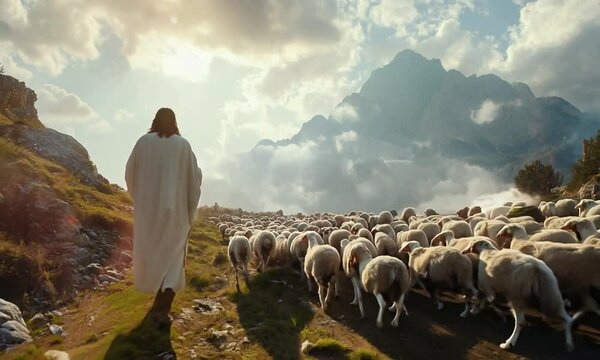
Fast forward to the New Testament in John 10:11, where Jesus says, “I am the good shepherd. The good shepherd lays down his life for the sheep.” Unlike any human shepherd, Jesus willingly laid down his life to protect, guide, and restore us back into a relationship with Himself.
I read a book a while back called A Shepherd Looks at Psalm 23 by W. Phillip Keller. It is a classic devotional where Keller, who was a shepherd himself, unpacks Psalm 23 with insights from firsthand experience caring for sheep. He uses imagery like how sheep need constant care, how they wander easily, and how the shepherd’s rod and staff guide and protect them. Below are some of my favorite quotes from the book:
“As the children of God, the sheep in the Divine Shepherd’s care, we should be known as the most contented people on earth. A quiet, restful contentment should be the hallmark of those who call Christ their Master.”
“It is the sheep owner’s presence that guarantees there will be no lack of any sort; there will be abundant green pastures; there will be still, clean waters; there will be new paths into fresh fields; there will be safe summers on the high tablelands; there will be freedom from fear; there will be antidotes for flies and disease and parasites; there will be quietness and contentment.”
“Just as the rod of God is emblematic of the Word of God, so the staff of God is symbolic of the Spirit of God. In Christ’s dealings with us as individuals, there is the essence of the sweetness, the comfort and consolation, the gentle correction brought about by the work of His gracious Spirit.“
“Nothing pleased me more than to see my flock flourish and prosper. It delighted me personally to no end to feel compensated for the care I had given them. To see them content was wonderful. To see the land benefiting was beautiful. And the two together made me a happy man.”
If this was the perspective of a human shepherd, then how much more does Jesus, the Good Shepherd, care for and love us as His sheep? Today, be reminded that the Good Shepherd is watching over us, protecting us, guiding us, correcting us, and delighting when we flourish. As His sheep, we can rest in His provision, trust His guidance, and walk in quiet contentment.
The Bigger Picture: As we trust the Good Shepherd, we find the confidence and peace to live our best life in Him.
 The Bigger Picture